


How to Write Major Key Chord Progressions
One question that so many new players have, especially after learning a bunch of chords, is how do you know which chords go together.
The answer is fairly simple, and it revolves around a simple bit of music theory knowledge. In this lesson we’re going to break that down and have you writing major key chord progressions in no time. This lesson uses chord shapes from the 10 Chord Shapes All Guitar Players Need to Know lesson on the Blackstar channel.
Firstly, you need to learn the Major scale. This is a scale which is the starting point for most theory concepts.

That is the first octave of the scale. We only need one octave for this. Now that we know the shape, we need to know the notes of the scale and give each one a number, known as an interval:
| I | II | III | IV | V | VI | VII |
| A | B | C# | D | E | F# | G# |
The major scale is going to be your blueprint for guitar theory. Now that you know the intervals, we need to fit a specific chord type to each of these intervals.
| I | II | III | IV | V | VI | VII |
| G | A | B | C | D | E | F# |
| Major | Minor | Minor | Major | Major | Minor | Diminished |
This piece of theory is very useful to remember because this is what will allow you to move this to other keys later on in this lesson.
Now you have 7 notes of the major scale and 7 chord types associated with each note.
This never changes. Whatever key you place this is, the intervals and chords associated with that interval remain the same. The only thing that changes is the notes of the major scale based on the key you play it in.
Here are the chord diagrams for A Major:
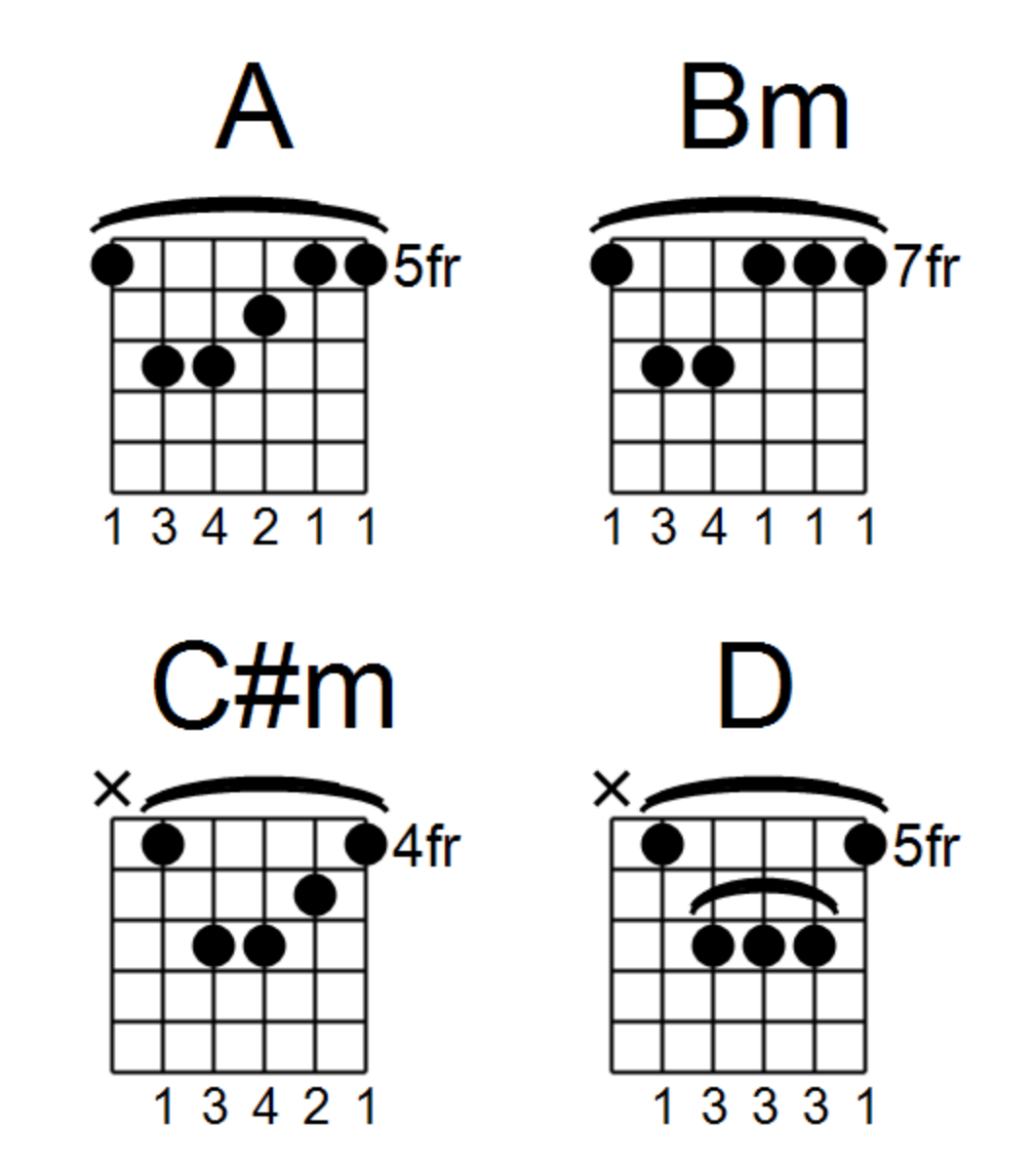
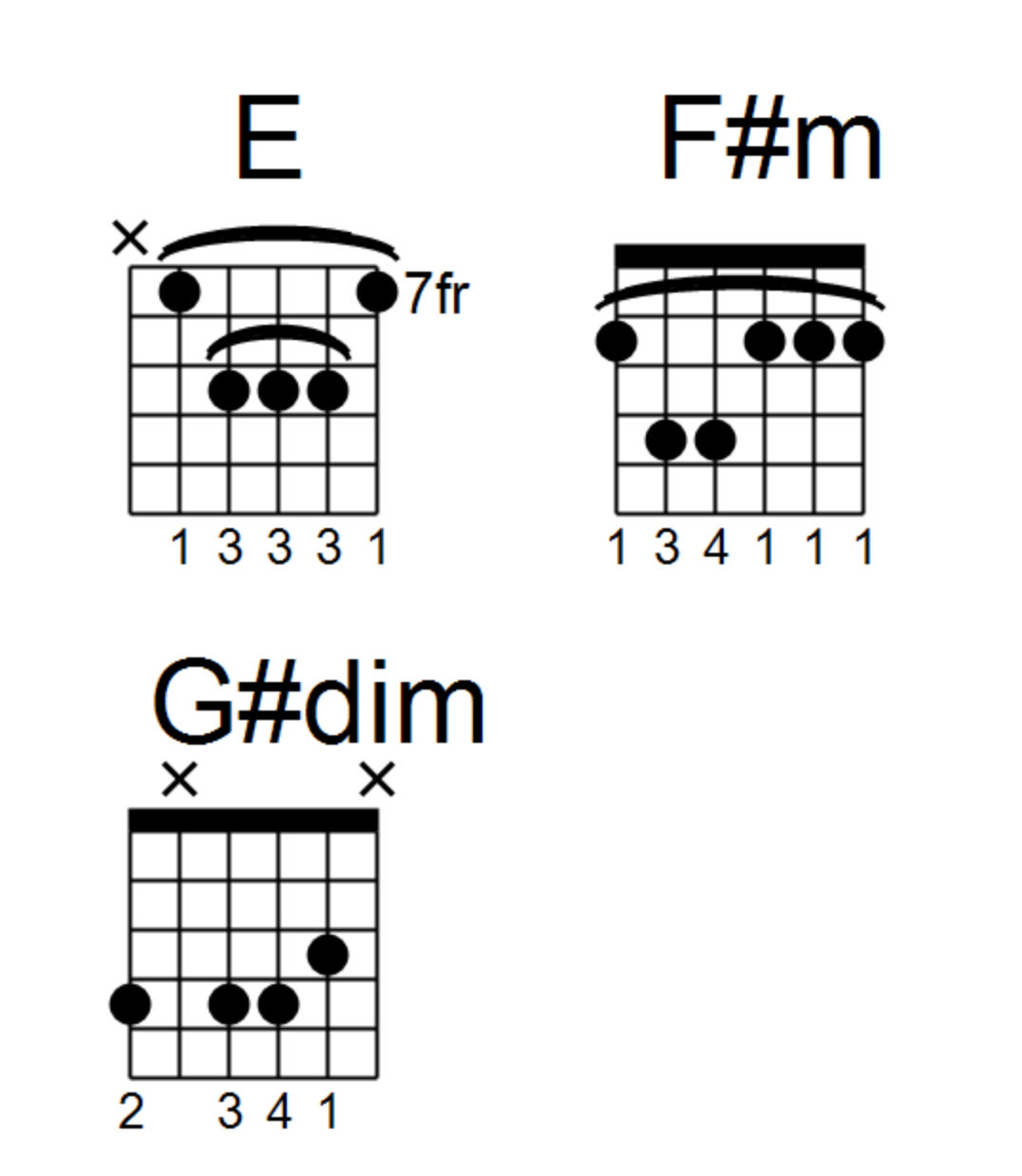
Once you’ve learnt the 7 chords that go into the key, you can then start putting them together. The great thing is that chords within a key will always sit together well. The only one you’ll have any trouble with is the Diminished chord, this is a chord that isn’t often used in most conventional music genres.
There are a few examples of chord progressions in action in the attached video.
Once you’ve gotten a grip on the key of A Major, you can actually transpose this to other keys simply by moving the major scale shape. Let’s say you wanted to take it to C Major, just take that scale pattern and root it from a C note, which is the 8th fret of the Low E.

This now gives you a new set of chords which fit into the same rule you learnt for A:
| I | II | III | IV | V | VI | VII |
| C | D | E | F | G | A | B |
| Major | Minor | Minor | Major | Major | Minor | Diminished |
Notice the chord type that sits on each interval is the same, but the chord note changes. This is because the theory rule tells us that specific chord types always sit on specific intervals of a major scale. The only thing that changes is the pitch of the chord based on the key you start it from.

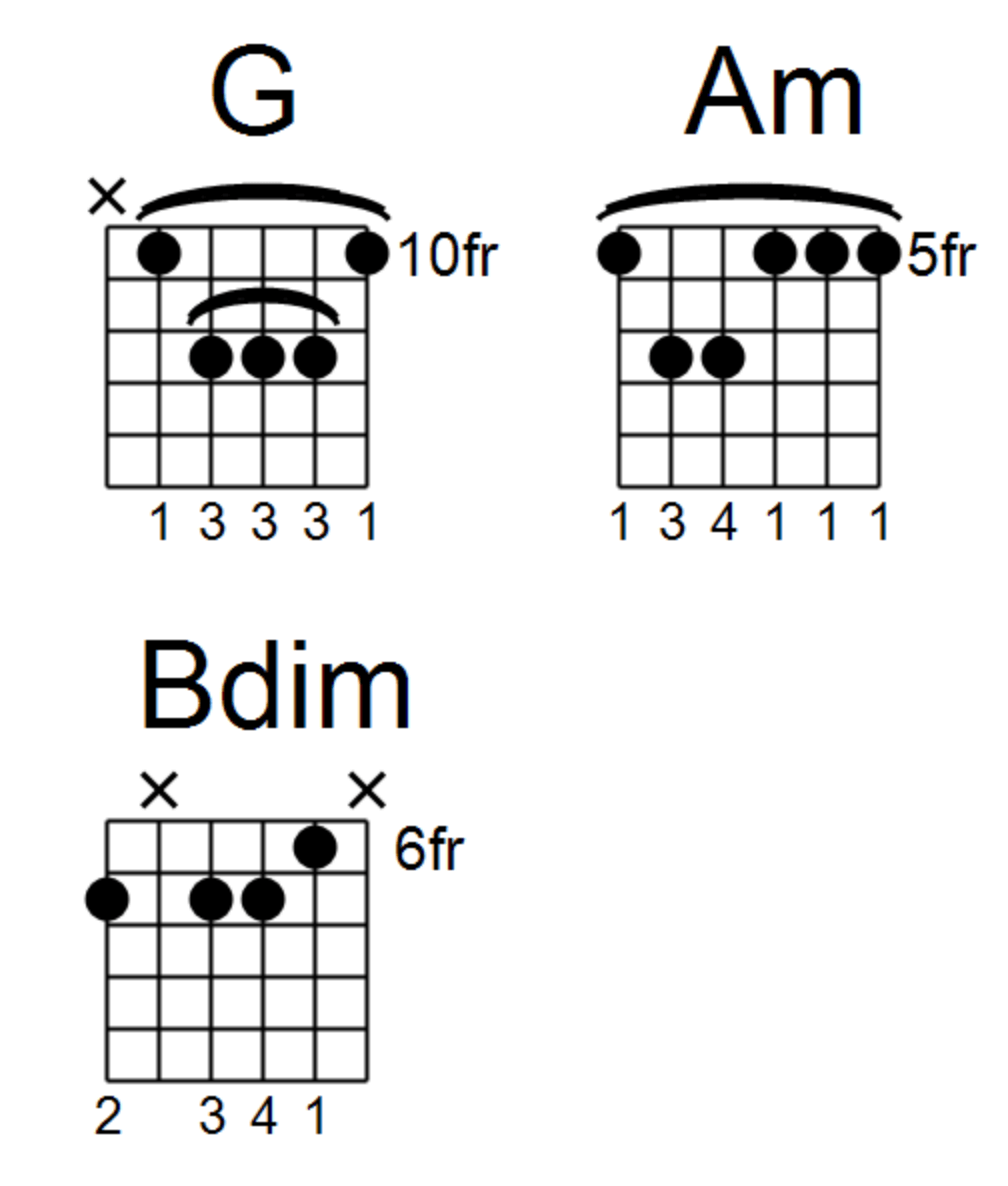
Just because you’ve learnt it based off barre chords, that doesn’t mean you have to stick to these chord voicings. You can use the theory to give you the chords in the key but place those chords elsewhere on the guitar, for example, as a series of open chords and barre chords towards the low end of the fretboard:
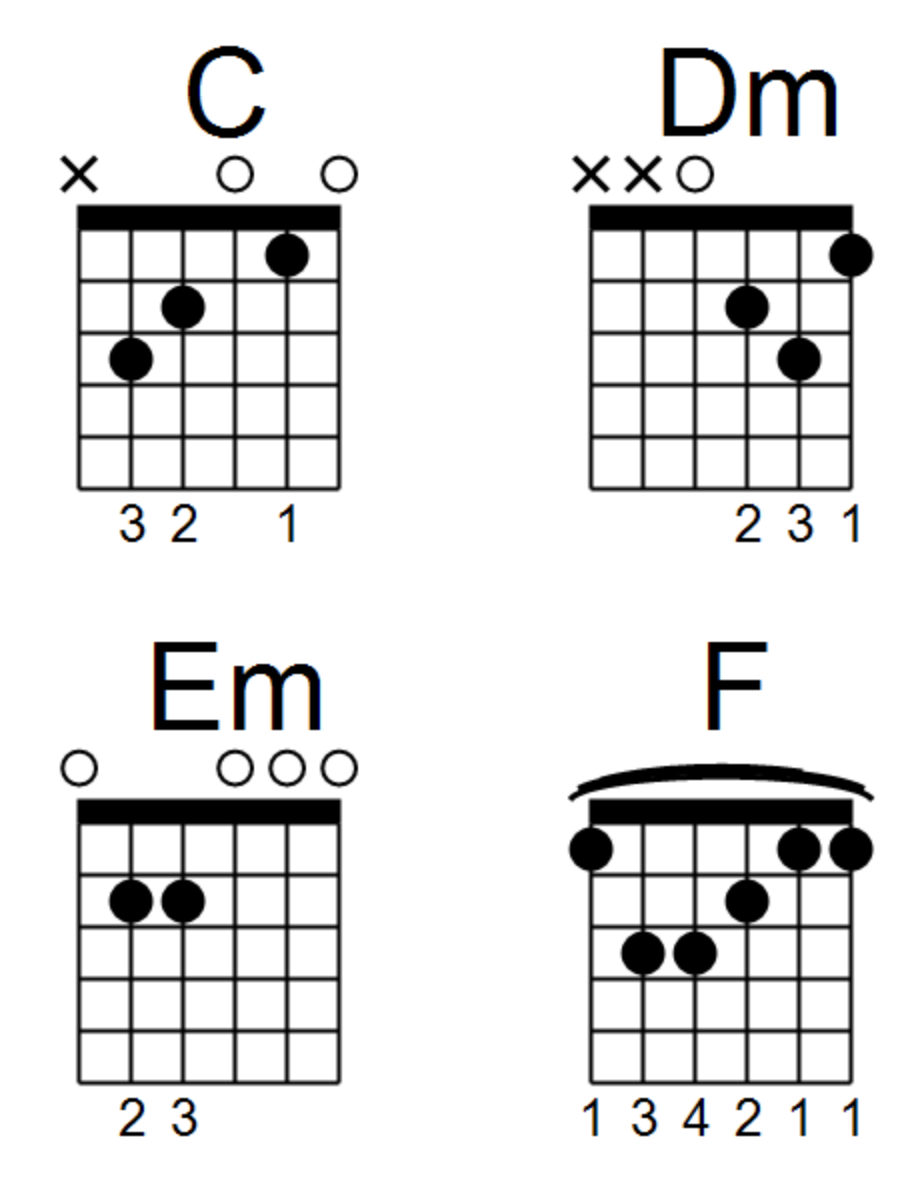

This principle can be used in any key and it will really open up the fretboard for you when being used in a creative way. You can also use other chord types as substitutes. Try swapping a Major chord for a Dom7 or a Minor chord for a Min7 for some different textures in your playing too.